
Home addition plans in the Cayman Islands: a complete guide
Home addition plans in the Cayman Islands: a complete guide
4/27/20265 min read
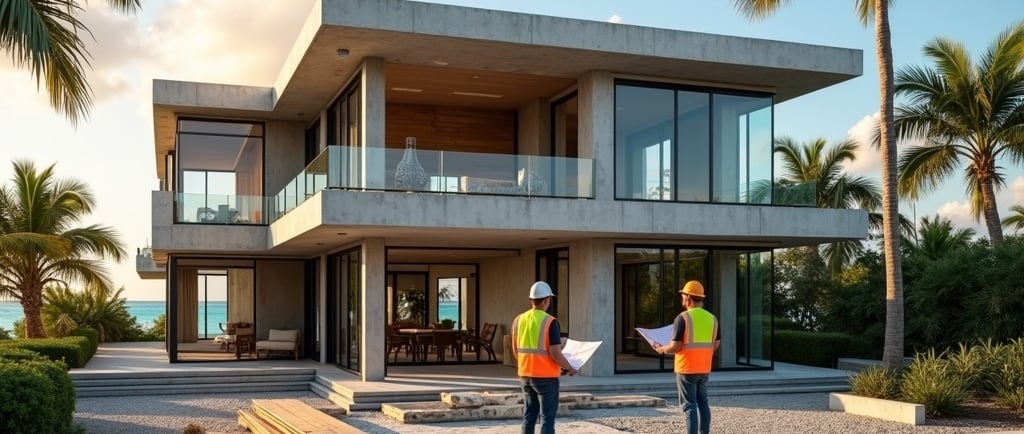
Home Addition Plans in the Cayman Islands: A Complete Guide to Expanding Your Property the Right Way
Whether your family has grown, your lifestyle has changed, or you simply need more functional space, expanding your home is one of the most significant investments you can make as a property owner in the Cayman Islands. Yet many homeowners underestimate the complexity involved — from structural engineering requirements to local planning permissions — and end up facing costly delays, failed inspections, or additions that diminish rather than enhance the value of their property.
Without a well-developed home addition plan, even a straightforward extension can spiral into an expensive, time-consuming project. Poor structural integration, inadequate hurricane resistance, and non-compliance with Cayman Islands building codes are among the most common issues that arise when additions are not properly planned and professionally executed.
This guide breaks down everything property owners in the Cayman Islands need to know about home addition plans — from the foundational concepts to best practices, common pitfalls, and how partnering with an experienced local construction company makes all the difference.
What Are Home Addition Plans and Why Do They Matter in the Cayman Islands?
A home addition plan is a comprehensive set of architectural and structural drawings, specifications, and documentation that defines how a new space will be added to an existing structure. This includes room additions, second-storey expansions, garage conversions, covered verandas, in-law suites, and more.
In the Cayman Islands, home addition plans carry particular weight for several reasons. The local regulatory environment requires building permit applications to be accompanied by detailed plans approved by a licensed professional. Additionally, the Caribbean climate demands that all structures — including additions — meet stringent hurricane resistance standards. The region's unique geology, coastal proximity, and soil conditions also influence foundation design decisions that would not apply in other markets.
Beyond compliance, a professionally prepared home addition plan ensures the structural integrity of your existing home is preserved during construction, that new spaces integrate seamlessly with existing systems (plumbing, electrical, HVAC), and that the finished addition adds genuine long-term value to your property.
Key Benefits of Professional Home Addition Planning
Regulatory Compliance: Properly prepared plans meet the requirements of the Cayman Islands Department of Planning, reducing the risk of permit refusals or enforcement actions.
Structural Safety: Engineered plans ensure load-bearing calculations are accurate, protecting both the existing structure and the new addition from failure.
Hurricane Resilience: Professional design incorporates wind uplift resistance, impact-rated materials, and reinforced connections required for Caribbean conditions.
Cost Certainty: Detailed plans allow for accurate contractor quotes and material estimates, minimising budget overruns during construction.
Increased Property Value: A permitted and professionally built addition adds measurable resale value, particularly important in the competitive Cayman Islands real estate market.
Design Cohesion: Thoughtful architectural planning ensures the addition complements the existing home aesthetically, maintaining kerb appeal and neighbourhood standards.
Faster Project Delivery: Clear, complete plans reduce ambiguity on-site, enabling construction teams to work efficiently and avoid costly rework.
Best Practices and Standards for Home Addition Plans
Following professional standards from the outset significantly reduces risk and improves outcomes. Recommended best practices include:
Engage a licensed architect or structural engineer early. In the Cayman Islands, structural drawings submitted for planning approval must be prepared or reviewed by a registered professional. Involving them at the design stage — not as an afterthought — prevents expensive revisions later.
Conduct a thorough site and structural assessment. Before any design work begins, the existing structure should be evaluated to understand its current load capacity, foundation type, and condition. This informs what types of additions are feasible.
Understand setback, height, and coverage requirements. The Cayman Islands Department of Planning enforces specific zoning regulations regarding how close structures can be to property boundaries and what percentage of a lot can be covered by buildings. These must be factored into your design.
Design to CI/Caribbean Building Code standards. All structural elements must meet local wind load and seismic requirements. This includes roof connections, wall tie-downs, and foundation anchoring.
Integrate MEP systems from the start. Mechanical, electrical, and plumbing systems for the addition should be planned in coordination with the existing infrastructure to avoid conflicts and ensure adequate capacity.
Allow for construction staging and sequencing. A good set of plans includes a logical construction sequence, which minimises disruption to the occupied home during works.
Plan for inspections. Build inspection hold points into the programme so work is not covered up before required sign-offs are obtained from building control authorities.
Common Mistakes and How to Avoid Them
Skipping the permit process: Unpermitted additions in the Cayman Islands are a serious liability. They can trigger stop-work orders, fines, and may need to be demolished. Always secure planning approval before breaking ground.
Underestimating structural impact: Adding a second storey or a heavy roof terrace without proper load calculations can compromise the structural integrity of the entire home. Always commission a structural engineering review before proceeding.
Using mainland building specifications: Plans drawn up for North American or European conditions often do not account for Cayman-specific hurricane loads, humidity, salt air corrosion, or local material availability. Ensure specifications are locally adapted.
Choosing the lowest bid without reviewing credentials: Budget contractors who lack local licensing, insurance, or experience with Cayman planning requirements may deliver substandard work that fails inspection. Vet your contractor carefully.
Failing to account for utility upgrades: Adding significant square footage without assessing whether the existing electrical panel, water supply, or drainage system can handle the increased demand often leads to expensive mid-project retrofits.
Neglecting drainage and stormwater planning: Given the frequency of heavy rainfall in the Cayman Islands, additions must be designed to manage surface water effectively to avoid flooding and erosion issues.
Applications and Use Cases for Home Additions in the Cayman Islands
Home additions serve a wide range of purposes across the residential and mixed-use property landscape in the Cayman Islands:
Family home expansions: Adding extra bedrooms, bathrooms, or living areas to accommodate growing families in established neighbourhoods such as George Town, Savannah, and Bodden Town.
Home offices and studios: Creating dedicated professional spaces within the home, increasingly in demand among remote workers and entrepreneurs based in Grand Cayman.
Rental income units: Adding a self-contained in-law suite or guesthouse to generate additional rental income in a high-demand short-term rental market.
Outdoor living enhancements: Extending covered verandas, adding pool decks, or building cabanas to maximise the Caribbean lifestyle, particularly in beachfront and canal-front properties.
Commercial property upgrades: Expanding retail, office, or hospitality premises without the cost and disruption of relocating, often relevant for Seven Mile Beach corridor businesses.
Luxury residential upgrades: Adding features such as home cinemas, gyms, spa rooms, or garages to high-end properties in developments like Crystal Harbour or Rum Point.
How J&R Construction Approaches Home Addition Projects
At J&R Construction, we understand that a home addition is not simply a construction project — it is an investment in your property's future and your family's quality of life. Our team brings deep knowledge of Cayman Islands planning regulations, building codes, and structural engineering requirements to every project. We work closely with licensed architects and structural engineers to ensure that every home addition plan is technically sound, fully compliant, and designed to perform in the Caribbean environment for decades to come.
From the initial feasibility assessment through to planning submission, construction, and final inspection sign-off, we manage the entire process with precision and transparency. Our clients benefit from clear communication, detailed project programming, and the confidence that their addition will be built to the highest professional standards — on time and within budget. Whether you are planning a modest room extension or a significant multi-level expansion, J&R Construction has the expertise and local experience to deliver results you can trust.
Conclusion: Start Your Home Addition the Right Way
A well-planned home addition has the power to transform how you live, work, and enjoy your property in the Cayman Islands. But the difference between a successful outcome and a costly problem almost always comes down to the quality of planning at the outset. By investing in professional home addition plans, engaging experienced local builders, and following the correct regulatory processes, you protect your property, your budget, and your peace of mind.
If you are considering adding to your home or commercial property in the Cayman Islands, do not leave it to chance. Contact J&R Construction today to schedule a consultation with our team. We will assess your project, guide you through the planning process, and deliver a home addition that exceeds your expectations.
Contact
Reach out for your next project today
Call
+1-345-9260575
© 2025. All rights reserved.