
Construction planning and scheduling in the Cayman Islands
Construction planning and scheduling in the Cayman Islands
5/16/20265 min read
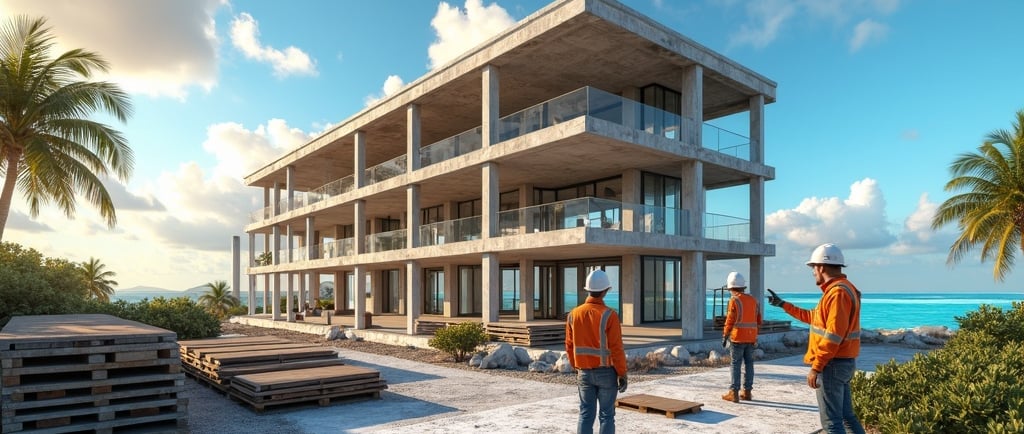
Construction Planning and Scheduling in the Cayman Islands: How to Keep Your Project on Time and on Budget
Every construction project in the Cayman Islands begins with a vision — a new home in Grand Cayman, a commercial development in George Town, or a resort renovation along Seven Mile Beach. But between that vision and a successful completion lies one of the most critical and often underestimated phases of any build: construction planning and scheduling. Without a robust plan in place, even the most well-funded project can spiral into costly delays, budget overruns, and compliance headaches.
The Cayman Islands present a unique construction environment. Island logistics, import timelines for materials, hurricane season considerations, government permit processes, and a competitive labour market all add layers of complexity that mainland contractors rarely encounter. These challenges make disciplined project planning not just beneficial — it is absolutely essential.
This article breaks down what construction planning and scheduling truly means, why it matters specifically in the Cayman context, and how working with an experienced local contractor like J&R Construction can be the difference between a project that finishes strong and one that stalls before it ever finds its footing.
What Is Construction Planning and Scheduling — and Why Does It Matter in the Cayman Islands?
Construction planning is the process of defining the scope, resources, tasks, timelines, and milestones required to complete a building project. Scheduling is the operational translation of that plan into a structured timeline — assigning who does what, when, and in what sequence.
Together, they form the backbone of every successful construction project. In the Cayman Islands, this process takes on additional significance due to several local factors:
Materials must be imported, often from the United States, Canada, or the United Kingdom, meaning procurement lead times can stretch weeks or even months.
The Atlantic hurricane season (June through November) directly impacts construction windows and site safety planning.
Government permits and approvals through the Central Planning Authority (CPA) require advance preparation and can influence start dates.
Skilled trades are in high demand across the islands, making early labour allocation critical to securing the right teams.
Without a detailed plan that accounts for these realities, projects face avoidable disruptions that erode profit margins and client confidence alike.
Key Benefits of Effective Construction Planning and Scheduling
Cost control: A well-structured schedule identifies resource needs in advance, reducing emergency procurement costs and overtime expenses.
Timeline accuracy: Realistic scheduling with buffer periods ensures delivery dates are achievable and communicated clearly to all stakeholders.
Risk reduction: Anticipating bottlenecks — from permit delays to material shortages — allows teams to develop contingency plans before problems escalate.
Improved communication: A shared project schedule aligns subcontractors, suppliers, clients, and site managers around common milestones and expectations.
Regulatory compliance: Planning ahead ensures all permits, inspections, and Cayman Islands building code requirements are integrated into the project timeline.
Resource optimisation: Scheduling prevents labour overlap, site congestion, and idle time — keeping crews productive and costs predictable.
Client satisfaction: Transparent planning builds trust, keeps clients informed, and dramatically reduces conflict during the build process.
Best Practices and Standards for Construction Scheduling
Professional construction management follows established methodologies to keep projects on track. The following best practices are recommended for any residential or commercial build in the Cayman Islands:
Define scope before scheduling begins. A clearly documented scope of work prevents mid-project changes that throw timelines off course. Every task and deliverable should be agreed upon upfront.
Use a Work Breakdown Structure (WBS). Break the project into defined phases — site preparation, foundation, structural work, MEP (mechanical, electrical, plumbing), finishes — and schedule each phase independently before integrating them.
Account for local procurement lead times. Order materials early, particularly imported items. Build supplier lead times directly into your project schedule as a hard constraint, not an afterthought.
Incorporate a weather buffer. Always plan for potential weather-related stoppages, especially during hurricane season. A 10–15% schedule contingency is a reasonable baseline for Cayman projects.
Sequence work logically and efficiently. Ensure trades follow a proper sequence — for example, framing before electrical rough-in, rough-in before drywall — to eliminate rework and waiting time.
Review and update the schedule regularly. A construction schedule is a living document. Weekly progress reviews ensure the plan reflects reality and adjustments are made proactively.
Align permits and inspections with milestones. Coordinate with the Central Planning Authority and local inspection requirements so approvals do not halt work at critical stages.
Common Mistakes and How to Avoid Them
Underestimating import and customs delays: Many projects stall waiting for materials held in customs. Avoid this by ordering materials well in advance and working with freight partners who understand Cayman Island logistics.
Failing to plan for permit timelines: Submitting permit applications too late causes start-date delays. Engage with regulatory requirements at the design stage, not after construction is scheduled to begin.
Overpromising timelines to clients: Unrealistic schedules damage client relationships. Build honest, data-driven timelines that account for all known variables and communicate them clearly from day one.
Neglecting subcontractor coordination: Assuming trades will self-coordinate is a recipe for conflict. Use a master schedule visible to all parties and hold regular coordination meetings throughout the build.
Skipping contingency planning: Projects without contingency budgets and schedule buffers have no room to absorb unexpected events. Always plan for the unexpected — in the Cayman Islands, it is a matter of when, not if.
Using outdated scheduling tools: Relying on informal communication or basic spreadsheets introduces errors. Professional project management software improves accuracy, accountability, and real-time visibility.
Applications and Use Cases in the Cayman Islands
Effective construction planning and scheduling applies across every sector of the Cayman Islands' dynamic building market:
Luxury residential builds: High-end homes on Grand Cayman require meticulous scheduling to coordinate specialised finishes, imported fixtures, and tight site access windows.
Commercial developments: Office buildings, retail centres, and mixed-use developments in George Town demand precise sequencing to meet lease commencement dates and investor timelines.
Hotel and resort renovations: Tourism-dependent properties require phased renovation schedules that minimise operational disruption while meeting brand standards and seasonal deadlines.
Multi-unit residential projects: Condominium and villa developments involve multiple units progressing simultaneously, making resource allocation and sequencing absolutely critical.
Infrastructure and civil works: Road upgrades, utility installations, and drainage projects depend on weather windows and coordinated contractor access that only detailed scheduling can manage.
How J&R Construction Approaches Construction Planning and Scheduling
At J&R Construction, planning is not a preliminary formality — it is the foundation upon which every successful project is built. Our experienced project management team develops comprehensive schedules tailored to the unique demands of the Cayman Islands construction environment. From the first site assessment to the final inspection, we coordinate every phase with precision: procurement, permitting, subcontractor management, and client communication are all integrated into a single, transparent project plan.
We combine proven industry methodologies with deep local knowledge — understanding Cayman's regulatory landscape, supplier networks, and seasonal realities in ways that only an established local contractor can. Whether you are building a custom residence, expanding a commercial facility, or undertaking a full-scale renovation, J&R Construction brings the structured planning expertise needed to deliver your project on time, on budget, and to the highest standards of quality.
Conclusion: Start with the Right Plan, Finish with Confidence
In the Cayman Islands' competitive and logistically complex construction market, the difference between a project that succeeds and one that struggles often comes down to the quality of planning done before the first shovel hits the ground. Investing in thorough construction planning and scheduling is not an overhead cost — it is the smartest investment you can make in the success of your build.
If you are planning a residential or commercial construction project in the Cayman Islands and want a team that prioritises precision, transparency, and results, contact J&R Construction today. Our team is ready to help you build smarter, faster, and with full confidence from start to finish.
Contact
Reach out for your next project today
Call
+1-345-9260575
© 2025. All rights reserved.