Concrete construction in the Cayman Islands: building for durability
For decades, construction in the Cayman Islands has faced a unique set of challenges. The tropical climate, hurricane exposure, saltwater corrosion, and the high cost of imported materials have all placed enormous pressure on builders and property owners seeking durable, cost-effective solutions. Choosing the wrong building material or relying on outdated construction methods can result in structural failure, spiralling maintenance costs, and significant safety risks.
3/12/20265 min read
Concrete Construction in the Cayman Islands: How Modern Concrete Is Changing the Rules for Builders and Property Owners
For decades, construction in the Cayman Islands has faced a unique set of challenges. The tropical climate, hurricane exposure, saltwater corrosion, and the high cost of imported materials have all placed enormous pressure on builders and property owners seeking durable, cost-effective solutions. Choosing the wrong building material or relying on outdated construction methods can result in structural failure, spiralling maintenance costs, and significant safety risks.
The consequences of poor material choices in this environment are not abstract. Premature deterioration of structures, hurricane damage that could have been mitigated, and costly renovation cycles are all too common across the Caribbean. For homeowners, developers, and investors, these outcomes represent both financial loss and serious disruption to daily life or business operations.
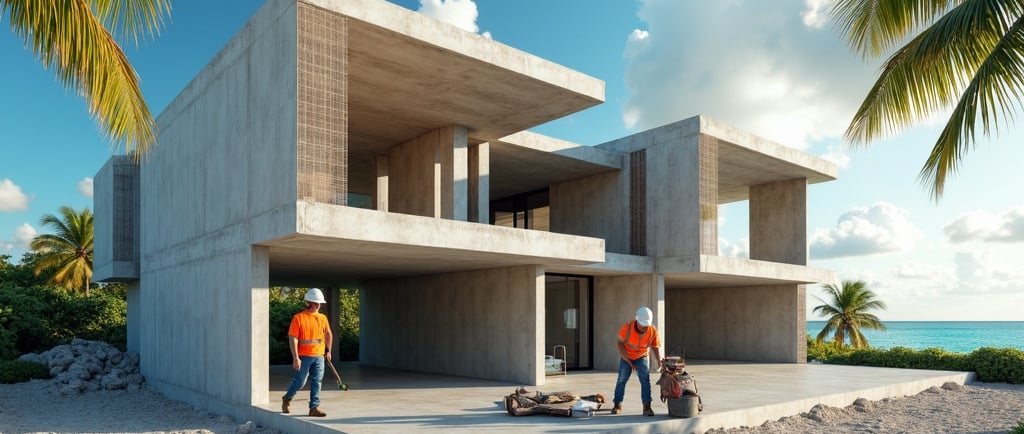
However, advances in concrete technology are fundamentally reshaping what is possible in island construction. Modern concrete — engineered for performance, resilience, and sustainability — is proving to be one of the most powerful tools available to construction professionals in the Cayman Islands. This article explores why concrete matters more than ever, how to use it correctly, and how J&R Construction leverages it to deliver exceptional results.
What Is Modern Concrete and Why Does It Matter in the Cayman Islands?
Concrete is one of the oldest and most widely used building materials in the world, but the term covers a broad spectrum of formulations. Modern concrete encompasses high-performance mixes, reinforced concrete systems, fibre-reinforced variants, and supplementary materials such as fly ash, silica fume, and polymer additives that dramatically enhance strength, flexibility, and resistance to environmental degradation.
In the Cayman Islands context, this matters enormously. Grand Cayman and the Sister Islands are located in an active hurricane zone and surrounded by a marine environment that is highly aggressive to standard building materials. Salt-laden air accelerates corrosion of steel reinforcements, moisture infiltration weakens conventional structures, and storm surge poses direct physical threats to buildings that are not engineered for resilience.
The local regulatory environment also demands high standards. The Cayman Islands Building Code requires structures to withstand significant wind loads, and insurance requirements for residential and commercial properties increasingly reflect the need for demonstrably robust construction. Modern concrete, properly specified and applied, is one of the most effective means of meeting and exceeding these standards.
Key Benefits of Modern Concrete for Cayman Islands Construction
Hurricane and wind resistance: Reinforced concrete structures offer superior resistance to high wind events, reducing the risk of catastrophic structural failure during tropical storms and hurricanes.
Saltwater and corrosion resistance: Specially formulated mixes with low water-to-cement ratios and corrosion inhibitors significantly extend the service life of structures in marine environments.
Thermal mass and energy efficiency: Concrete's natural thermal mass helps regulate interior temperatures, reducing the load on air conditioning systems and lowering long-term energy costs — a notable advantage in the Caribbean climate.
Design flexibility: Modern concrete can be cast into virtually any shape, allowing architects and developers to achieve sophisticated aesthetic outcomes without compromising structural integrity.
Low maintenance requirements: A correctly specified and placed concrete structure requires far less ongoing maintenance than timber or light steel alternatives in humid, coastal conditions.
Long-term investment value: Durable construction directly supports property value retention and reduces lifecycle costs for developers and homeowners alike.
Sustainability credentials: Advances in supplementary cementitious materials and recycled aggregates are making concrete increasingly sustainable, supporting environmentally responsible development goals.
Best Practices and Standards for Concrete Construction in the Cayman Islands
Engage a qualified structural engineer from the outset. Concrete mix design and reinforcement detailing must be tailored to the specific loads, soil conditions, and environmental exposures of each project site.
Specify the correct concrete mix for the exposure class. Marine environments require mixes designed to limit chloride ion penetration and minimise the risk of reinforcement corrosion. This typically involves low water-cement ratios and the use of supplementary cementitious materials.
Ensure adequate concrete cover over reinforcement. Increasing cover depth slows the ingress of chlorides and carbonation, protecting steel reinforcements from corrosion over the long term.
Use certified, tested materials. All concrete ingredients, including aggregates, cement, and admixtures, should be sourced from reputable suppliers and tested for compliance with applicable standards.
Implement rigorous quality control during placement and curing. Proper compaction, consistent placement, and adequate curing are critical to achieving the design strength and durability of any concrete element.
Conduct regular inspections post-construction. Periodic professional inspection allows early identification of surface cracking, spalling, or reinforcement corrosion, enabling timely and cost-effective remediation.
Comply fully with the Cayman Islands Building Code. All structural concrete work must be designed and executed in accordance with local regulatory requirements, including wind load provisions relevant to hurricane-prone zones.
Common Mistakes and How to Avoid Them
Using a standard mix in a marine environment: Standard concrete mixes are not formulated to resist chloride penetration. Always specify a marine-grade or high-performance mix when building near the ocean.
Insufficient concrete cover over steel: Inadequate cover accelerates corrosion, leading to spalling and structural weakening. Follow engineer specifications for cover depth rigorously and do not allow shortcuts on site.
Poor curing practices: Allowing concrete to dry too quickly in Cayman's heat results in surface cracking and reduced strength. Implement proper curing protocols, including wet curing or curing compounds, for the full required duration.
Ignoring site-specific soil and groundwater conditions: The Cayman Islands have variable ground conditions including areas with high water tables. Failing to account for these in the foundation design can lead to settlement and structural movement.
Selecting a contractor based solely on price: Cutting costs on concrete work in a demanding environment is a false economy. Prioritise contractors with demonstrated experience in high-performance concrete construction and a track record in the local market.
Overlooking thermal expansion and contraction: Temperature fluctuations in tropical climates can cause cracking in poorly detailed concrete elements. Proper joint design and detailing prevent this common issue.
Applications and Use Cases Across the Cayman Islands
The versatility of modern concrete makes it applicable across virtually every sector of construction activity in the Cayman Islands.
Luxury residential villas and homes: High-net-worth buyers expect both aesthetic excellence and structural resilience. Reinforced concrete frames combined with thoughtful architectural detailing deliver both.
Commercial and retail developments: Office buildings, hotels, and retail centres benefit from concrete's ability to span large open spaces, resist wind loads, and provide fire resistance — all critical considerations for commercial occupancy.
Waterfront and marina structures: Jetties, seawalls, and waterfront buildings demand the highest levels of marine durability. Specialist concrete formulations are essential in these environments.
Renovation and structural upgrade projects: Concrete repair mortars and reinforced concrete overlays are used to extend the life of existing buildings and bring aging structures up to current standards.
Infrastructure and civil works: Roads, drainage systems, and utility structures across the island chain rely on durable concrete to function reliably in tropical conditions.
How J&R Construction Approaches Concrete Construction
At J&R Construction, our approach to concrete work is grounded in technical knowledge, local experience, and a genuine commitment to quality outcomes for our clients. We work closely with qualified structural engineers and material suppliers to ensure that every concrete element — from foundations to roof structures — is designed and built to perform in the Cayman Islands environment. Our team understands the specific challenges posed by the marine climate, the regulatory requirements of local building codes, and the expectations of discerning property owners and developers.
Whether we are delivering a new-build luxury residence, a commercial development, or a structural renovation, our process includes rigorous quality control at every stage of concrete production and placement. We do not compromise on material specifications, curing protocols, or workmanship standards. Our clients benefit from structures that are built to last, protect their investment, and stand up to whatever the Caribbean climate demands.
Conclusion: Build Smart, Build to Last
Modern concrete represents one of the most significant opportunities available to property owners, developers, and builders in the Cayman Islands today. When properly specified, placed, and maintained, it delivers a combination of strength, durability, design flexibility, and long-term value that few other materials can match in this environment.
The key is working with a construction partner who understands both the material and the local conditions in which it must perform. Do not leave your investment to chance. Contact J&R Construction today to discuss your residential, commercial, or renovation project and discover how our expertise in high-performance concrete construction can help you build with confidence in the Cayman Islands.
Contact
Reach out for your next project today
Call
+1-345-9260575
© 2025. All rights reserved.